
Light, explained.
Four technologies, a dozen shapes and a scale that runs from candlelight to daylight. What the numbers on the box actually mean — and which bulb belongs in which fixture.
Types of bulbs
There are four types of bulb on the market.
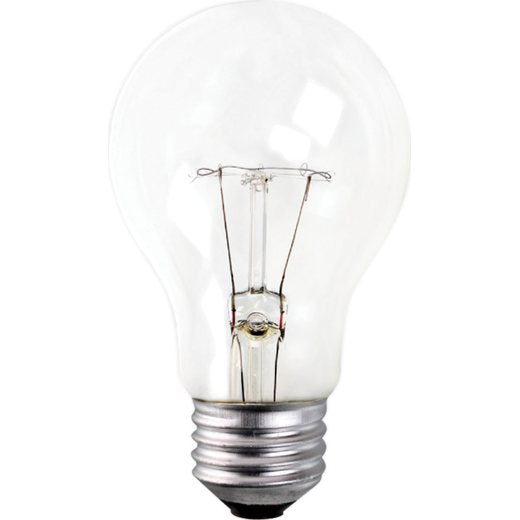
Incandescent
Incandescent bulbs contain a filament which glows white-hot when a current is passed through it. Although they were the primary source of home and work lighting for a long time, they are not as energy efficient as newer types, and have a shorter life of around 1,000 hours.
Browse incandescent →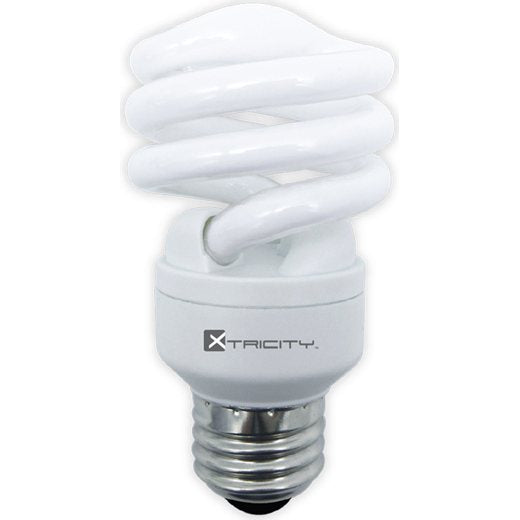
Compact fluorescent
CFL bulbs are low-pressure mercury-vapour gas-discharge lamps that use fluorescence to produce visible light. The current ignites the mercury vapour, producing short-wave ultraviolet light that makes a phosphor coating inside the lamp glow. They are more energy saving than incandescent and cast an even light, averaging 10,000 hours — but are less eco-friendly since they contain mercury.
Browse compact fluorescent →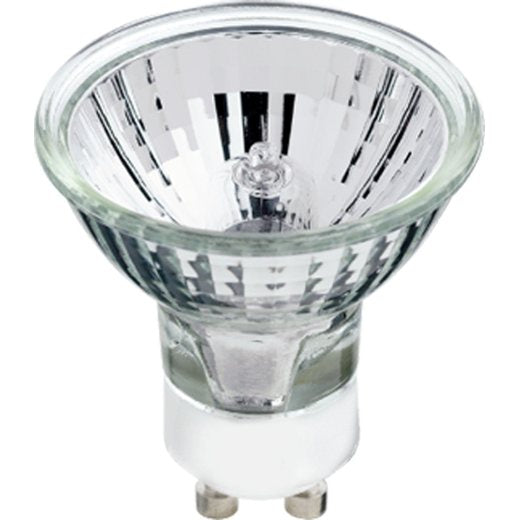
Halogen
Halogen bulbs produce light in a quartz glass filled with low-pressure halogen gas, which passes the current through a tungsten wire. They have a limited lifespan, heat up as soon as they are turned on, and consume abundantly.
Browse halogen →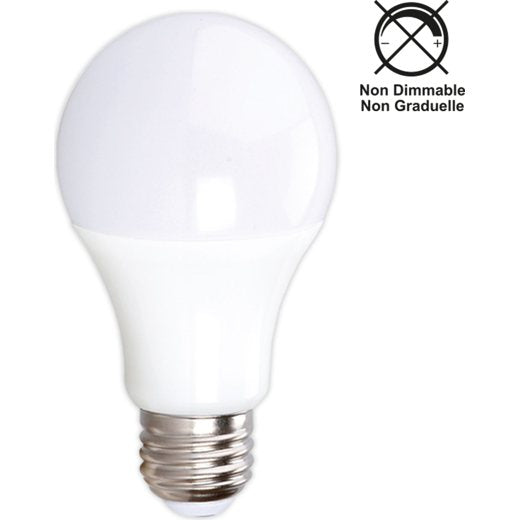
LED
An LED bulb produces light using light-emitting diodes. They are far more energy-saving and can last up to 40,000 hours. They also work well outdoors and are easily disposed of.
Browse LED →Brightness
The lumen (lm) measures the light intensity of the bulb. The number of watts represents consumption. The evolution of LED decreases consumption and increases lumens.
 Incandescent Incandescent |  Compact fluorescent Compact fluorescent |  Halogen Halogen |  LED LED | |
|---|---|---|---|---|
| 350 – 400 lumens | 40W | 9W | 40W | 6W |
| 750 – 800 lumens | 60W | 13W | 60W | 10W |
| 1500 – 1600 lumens | 100W | 23W | 150W | 17W |
| 2500 lumens and more | 150W | 40W | 250W | 28W |
Colour temperature of light
Colour temperature describes the light appearance a bulb provides. It is measured in degrees Kelvin (K).
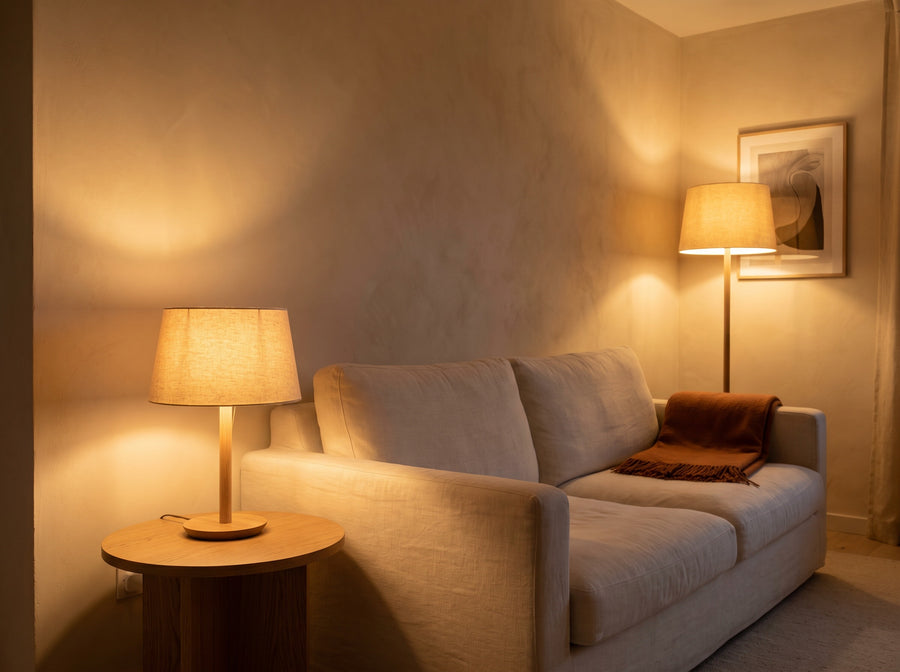
Warm — 2700K to 3000K
Warm colours are more relaxing for the eyes. Perfect for residential use: living room, dining room, bedroom, or any room where you want soft lighting.
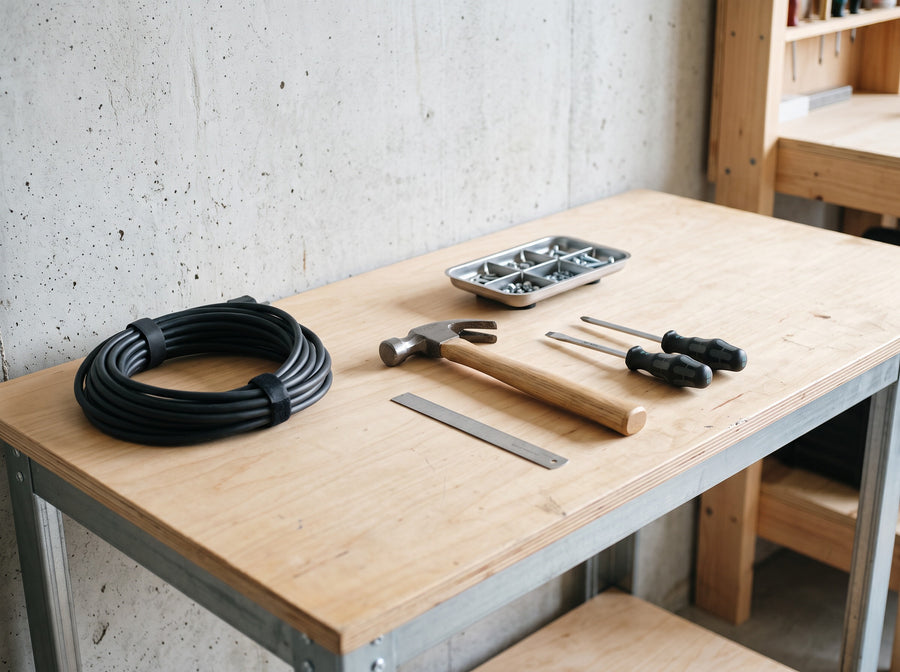
Cool — 4000K to 5000K
Cool colours are always more luminous than warm colours. Perfect for industrial use: office, garage, workshop, or any room where you want lighting that shows the real colour of an object.
Beam angle
The beam angle of a bulb is the angle at which light is distributed or emitted.
Flood (multi-purpose)
Use for most lights — normal ceiling light.
Browse these →Wide flood (multi-purpose)
Maximum spread — use for landscaping lights.
Browse these →Bulb shapes
LED bulbs offer a multitude of versatile shapes.
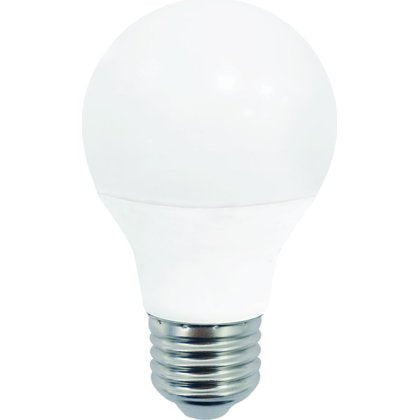
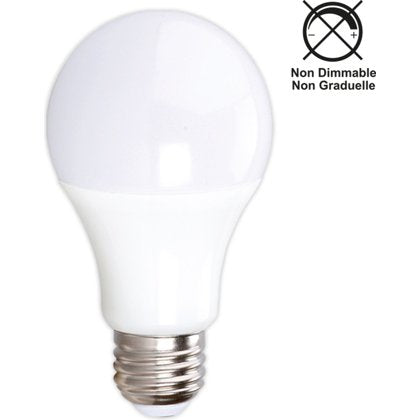
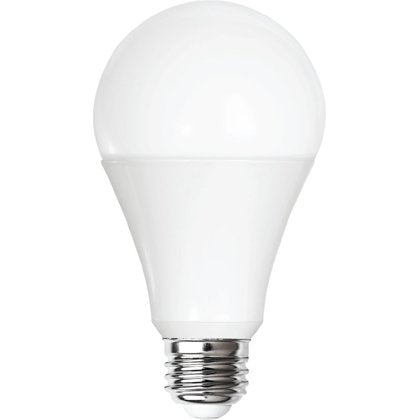
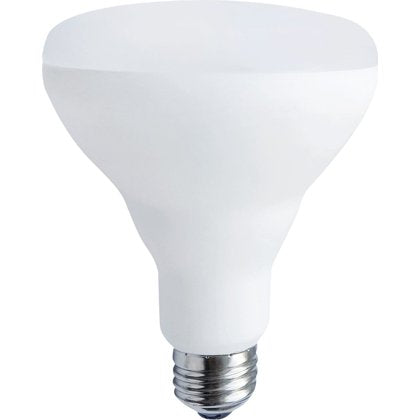
Type MR16 / PAR / R / BR — flood light
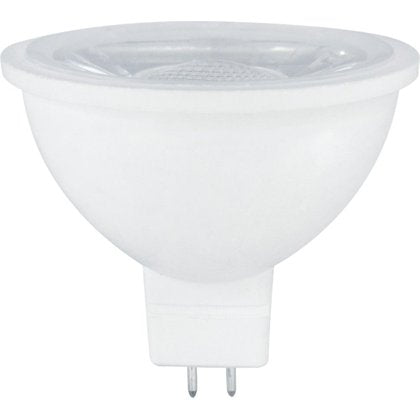
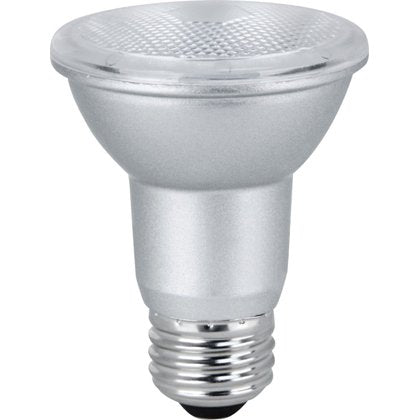
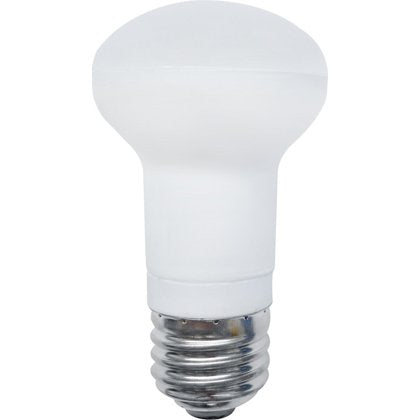
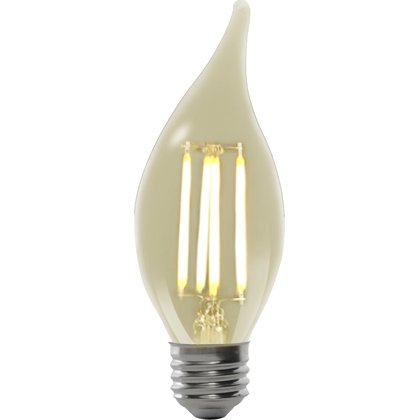
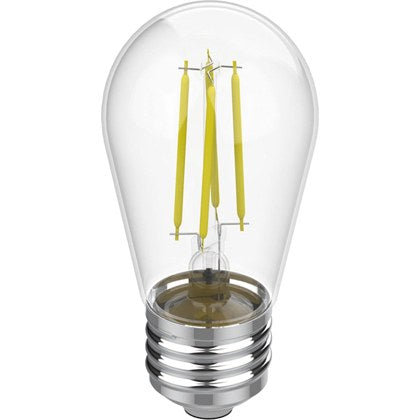
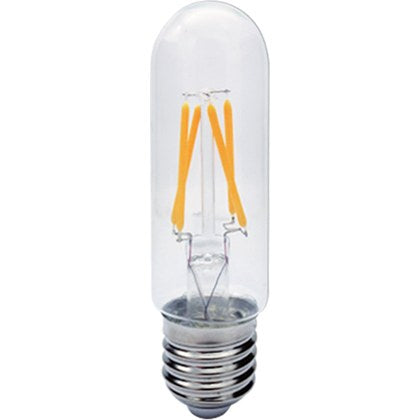
Type C / S / T — decorative light
Type G — vanity light
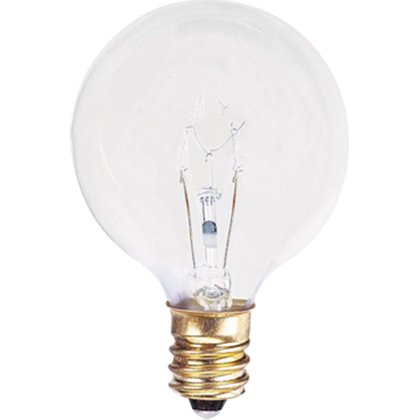
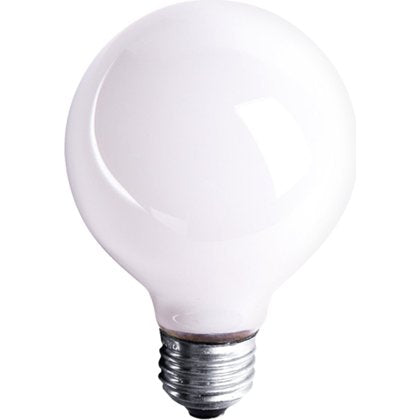
Specialty
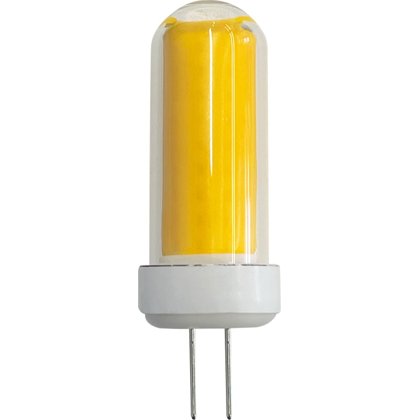
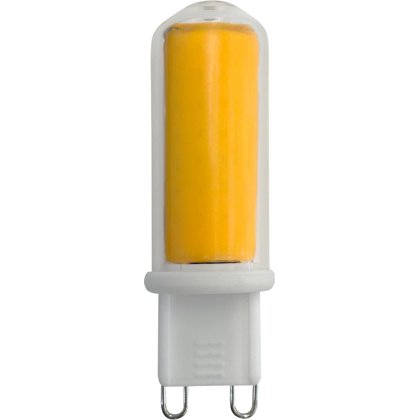
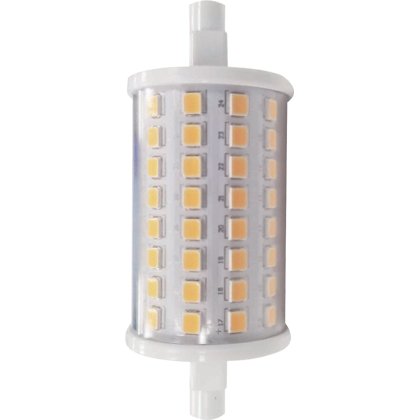
Bases
Reading the box
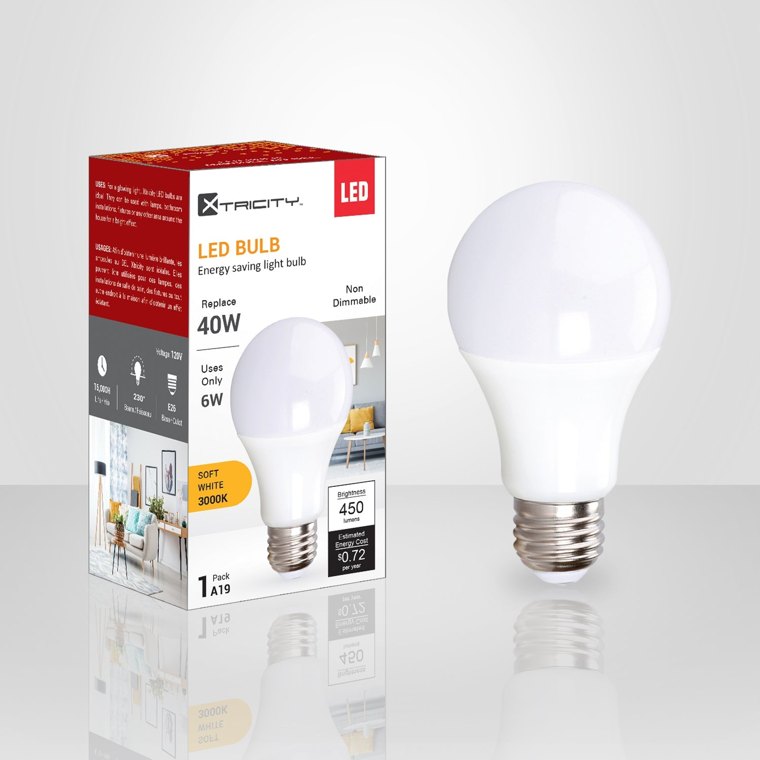
- Lumens — the unit of measurement for the light emitted.
- Kelvin — the colour temperature of the light, between 2700K (soft white) and 6500K (daylight).
- Consumption — much lower on LED because of the low wattage. Based on 11¢/kWh, about $1.20 per year.
- Equivalence — a 60W incandescent bulb is only 10W in LED for the same brightness.
- Life — an incandescent bulb lasts 10,000 hours against 20,000 for LED, which is 22.8 years at 3 hours a day.